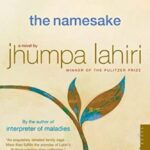
Jhumpa Lahiri The Ganguli family moves from Calcutta to Massachusetts. The story focuses specifically on the life of their American-born son, Gogol. Named after the Russian author, the struggle with his name becomes a metaphor for his broader identity crisis as a second-generation immigrant. The narrative explores the friction between the traditional expectations of his…
Read more
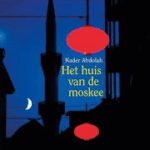
Originally written in Dutch and published in 2005, The House of the Mosque (Het huis van de moskee) narrates the story of a family living beside a mosque in a quiet Iranian town, where everyday life gradually begins to shift as the Iranian Revolution approaches. At the centre of the story is Aqa Jaan, who…
Read more
Kazem Haideri is an Iranian poet living in Italy whose evocative and often minimalist poetry has significantly enriched Italian literature. His work, recognised with the Eugenio Montale International Poetry Prize, frequently explores the loneliness, displacement, and spiritual searching that accompany forced migration.Haideri’s poems blend traditional Persian poetic forms with modern European styles, offering a reflective…
Read more
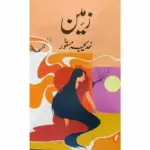
[A Promised Land] Khadija Mastoor This novel tells the story of a young woman navigating the transition to the newly created state of Pakistan after the Partition of 1947 and mirroring the historical weight of millions of refugees generated by this phenomenon. Through the voice of its characters, the novel exposes the hypocrisy embedded in…
Read more
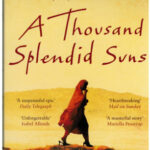
The novel chronicles the intersecting lives of two Afghan women, Mariam and Laila, whose destinies are shaped by thirty years of volatile political shifts. From the Soviet invasion to the rise of the Taliban, the story documents their struggle for survival within a society defined by war and systemic patriarchal oppression. Despite their different backgrounds,…
Read more
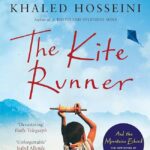
Khaled Hosseini The narrative follows Amir’s life from his childhood in Kabul to his eventual exile in the United States, covering significant moments in Afghan history. It tells the story of a friendship complicated by the rigid ethnic hierarchies between Pashtuns and Hazaras, and the enduring weight of a childhood betrayal. When the monarchy falls…
Read more
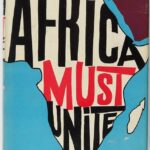
Kwame Nkrumah. First President of Independent Ghana (1957). Published in 1963, the same year as the Organization of African Unity was founded, Africa Must Unite can be considered as a revolutionary manifesto. Kwame Nkrumah, the first president of independent Ghana (1957) issues a passionate warning. He argues that if the newly liberated African nations remain…
Read more
Léopold Senghor. First President of the Independet Senegal (1960) Senghor is the first President of Independent Senegal. He writes as a man caught between two worlds, trying to bridge the gap between his African roots and his European education. Indeed, he studied and worked in France. For Senghor, being “free” meant reclaiming the “rhythm” and…
Read more
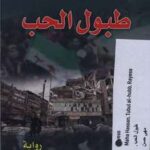
[Ṭubūl al-ḥubb] 2013 Maha Hassan Emerging from the feverish early years of the Syrian uprising, Drums of Love (Ṭubūl al-ḥubb) is a novel pulsing with the digital heartbeat of a revolution. The story’s focus is Rima, a woman living in the safety of Paris, who is divided between her life in Europe and her online…
Read more
Gims (formerly known as Maître Gims), singer, text writer and music producer, was born as Gandhi Djuna in 1986 in Kinshasa, Democratic Republic of the Congo. When he was about two years old, he migrated to France with his family. They arrived as immigrants and lived for years without a regular legal status. Growing up…
Read more