Zeynnep is a Turkish woman who has been living in Utrecht for the past three years. She asked to remain anonymous, and so we have given her the name Zeynnep for this story. I met her through the MILAGRO project, and from conversation it was clear that she carries both the weight of an extraordinary journey and a remarkable, almost irrepressible warmth toward the people around her.
When she first arrived in the Netherlands, she was asked which city she wanted to live in. Her answer said everything: it didn’t matter. “I just want to live somewhere safe and free- for me and for my children.” Freedom, not comfort. Safety, not convenience. That was the entirety of her expectation, and it tells you something important about what she had left behind.
Her first day was anything but gentle. She arrived alone, her husband and two children had stayed behind in Greece, a temporary arrangement that would stretch into nearly a year. At the registration centre, she describes feeling as though she had done something wrong: long hours of waiting, her belongings taken from her, surrounded by strangers from many countries. She spotted a Turkish man across the room and moved toward him, not because she knew him, but because the sight of someone from home offered a fragile sense of safety. “It was a kind of high trust without knowing the person,” she tells me, “just because he was from Turkey.”
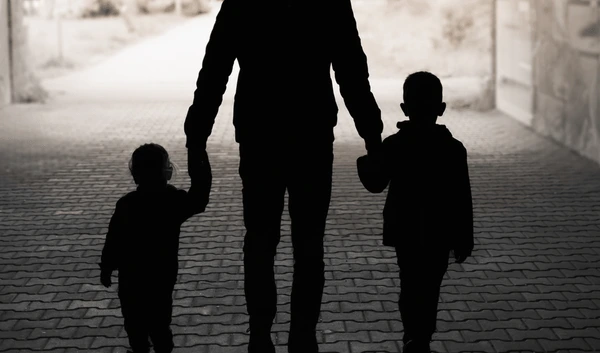
The year that followed was one of the hardest of her life. She counted the days not as a person living but as someone simply passing through time. Her entire existence narrowed to one thought: her children. Everything she ate, everything she did, was measured against what it would eventually mean for them. Then came the panic attack, a night that as she describes it she thought she was dying, unable to breathe, unable to explain what was happening even to the doctor who had been called. She did not know, then, that it was a panic attack. She only knew that she might not see her family again.
The asylum centre was not a peaceful place. She witnessed a man die by suicide in the flat directly above her own, broken by a system that had made him wait too long. She watched a woman run screaming through the corridors. A man on a bicycle once chased her down the street, shouting in Dutch, the language she did not yet understand. Her children, when they finally arrived, told her that other children in the playground had refused to play with them because they were not Dutch. Each of these moments amplified her fear far beyond what it might have been in ordinary circumstances, because she was already living at the very edge of herself.
And yet, what is most striking about Zeynnep is not what broke her down, but what she built back up.Once reunited with her family and settled into a home, she threw herself into learning. She had been a teacher in Turkey and hoped to teach English here too, until a professor told her, bluntly, that she did not have the qualifications for Dutch students. “That sentence collapsed my mental health,” she says. She spent two weeks believing she would never teach again. And then she decided she would not accept it. She applied for PhD programmes. When a university called her for an interview, she felt the ground shift beneath her. “My CV, my experiences, they are not nothing,” she remembers thinking. Today, she works as a teacher in a school in Utrecht. She would very much like that professor to know that she made it.
Alongside this professional rebuilding, there was another, quieter transformation taking place. For a long time after arriving, Zeynnep did not share anything about herself publicly, not on social media, not with neighbours, not with anyone she did not have to. In Turkey, in the years before she left, she had learned not to be visible. Being watched had felt dangerous. So when she finally posted a photo online, just a simple picture other people would not even consider problematic, and nothing happened, the realisation crept over her slowly: nobody is following me. Nobody is going to find me. It was, she says, the moment she truly understood she was free. She began sharing her successes after that: her B2 Dutch exam, demonstrating the great fluency she had acquired, and her completed master’s degree. Not out of vanity, but because seeing how far she had come gave her the strength to keep going. “Every day I think: if there is a sun, there is hope,” she tells me. “Even on a rainy day, because we still use the light of the sun. Even when it’s cloudy, there is still hope.”
That philosophy of openness extended to her front door, and this is where Zeynnep’s story becomes something quite particular. She began knocking on her neighbours’ doors. She brought cakes. She brought small dishes of food she had cooked herself. The first reactions were almost always surprising- one neighbour asked if something had happened, if she had a surplus she needed to give away. Another, an elderly woman living alone, opened her door on her birthday to find Zeynnep standing there with a piece of cake, and burst into tears.
“I didn’t have any members of my family here,” Zeynnep says. “I feel like you are a part of my family because I’m living with you.” She eventually invited all fifteen of her neighbours to share a lunch together which is something she describes as one of the most perfect days she has had in the Netherlands. For Zeynnep, this kind of spontaneous neighbourliness is simply how she was raised. In Turkey, you do not need an appointment to check on someone. You come, you give something, you say hello, you leave. Two minutes. A piece of cake. That is enough.
What grew from those two minutes has become something genuinely mutual. She now celebrates her neighbours’ Passover and other traditions alongside them; they, in turn, celebrate hers. They give small presents to her children, and she lights up when she describes this, because when her children are happy, she is happy. One neighbour, reflecting on how the community had come together, said it back to her plainly: “It is from you. If you open the doors, we may come in.”
The transformation is visible in other ways too. She wears her hair down now, in colours she chose herself. Before, she kept it pulled back and hidden. It sounds like a small thing, but she describes it as its own kind of declaration, that she can express herself freely, that she no longer has to be any particular way for anyone. “The feeling of freedom also gave my hair,” she laughs.
She speaks of Utrecht with real affection. Compared to other places she has passed through, she finds it genuinely multicultural, genuinely open. Nobody has run after her here. Her children play freely. She has learned Dutch to an advanced level, built friendships through her studies and through an inclusion traineeship programme, and found, she says, “perfect neighbours” which was, from the very beginning, all she ever prayed for. Not a garden. Not a big house. Just good people around her.
Her hopes for the future are straightforward and human. She wants stability for herself, for her husband, for her children, who have spent too many years moving and adapting and beginning again. She would like to pursue a PhD if she can. She would like her husband, who has struggled deeply with his mental health, to find work and with it a sense of dignity and wellbeing. She wants, she says simply, a happy and healthy life. She has not had an uninterrupted one for a very long time.
When I asked what advice she would give to someone who has just arrived in Utrecht, she answered without hesitation: learn the language. And then, after a pause, she adds something else. She tells newcomers not to mistake Dutch reserve for coldness. The distance is not permanent. It is an unlocked door, not a wall. “If you are open,” she says, “most of the people, if they know you, they trust you. And they have a place for you.”
Zeynnep has made that place for herself, one neighbour, one cake, one open door at a time.
written by Sofija Baklaja (student at University College Utrecht).