
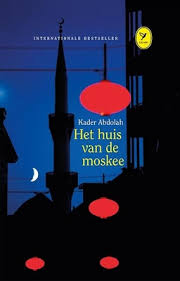
Originally written in Dutch and published in 2005, The House of the Mosque (Het huis van de moskee) narrates the story of a family living beside a mosque in a quiet Iranian town, where everyday life gradually begins to shift as the Iranian Revolution approaches. At the centre of the story is Aqa Jaan, who struggles to preserve long-standing traditions, while younger generations, such as Shahbal, find themselves increasingly drawn into the turmoil and uncertainty of political change.

What makes this novel particularly compelling is not only its historical backdrop, but also the emotional depth with which it portrays the experience of transformation. Through the characters’ lives, the reader encounters the sense of losing a familiar world, of witnessing profound social change while attempting to hold on to a sense of home and continuity. Abdolah, who himself experienced the upheavals surrounding the Iranian Revolution, writes with a perspective shaped by lived experience.
Blending themes of faith, politics, family and fear, the novel illustrates how large historical events gradually enter the intimate spaces of everyday life. By bringing elements of Persian history and cultural heritage into Dutch literature, Abdolah’s work highlights the capacity of literature to foster intercultural understanding and dialogue. The House of the Mosque is widely regarded as an important contribution to migrant literature in the Netherlands.