
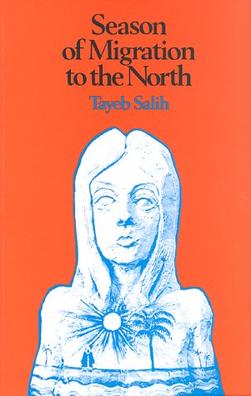
[Mawsim al-hiǧra ilā al-šamāl] 1966
Originally written in Arabic and published in 1966, Season of the Migration to the North is a landmark of post-colonial literature. Set in a small village on the banks of the Nile in Sudan, this story follows an unnamed narrator who returns to his birthplace after years of studying in Europe. His reintegration is disrupted by the discovery of Mustafa Sa’eed He is a mysterious stranger living in the village. His past life in London reveals a dark, obsessive history of intellectual brilliance and destructive romantic conquests.
This novel is particularly compelling because of its intricate exploration of the psychological and cultural collisions between East and West. Rather than offering a straightforward narrative of return, the novel functions in “reverse”. The protagonist and Mustafa Sa’eed, grapple with the heritage of colonial rule and the fragmented identity of the “modern” African man. Salih’s prose is both lyrical and haunting, moving seamlessly between the domestic rhythms of Sudanese village life and the cold, intellectual landscapes of mid-20th-century Britain.
[Salih, T. (1970). Season of Migration to the North. Heinemann]
Sources:
https://www.africarebirth.com/book-review-season-of-migration-to-the-north-by-tayeb-salih